---
title: Why Are Jobs Taking Too Long? Find Bottlenecks Fast
description: Struggling with slow turnaround times? Learn how to identify workflow bottlenecks, reduce technician wait time, and improve shop efficiency.
image: https://blog.autovitals.com/hubfs/Template-2.png
---
(866) 949-2848 support@autovitalsinc.com
-
-
-
- [mailto:support@autovitalsinc.com](mailto:support@autovitalsinc.com)
- [tel:866-949-2848](tel:866-949-2848)
[](https://www.autovitals.com/)
×
- [The Digital Shop®](https://www.autovitals.com/the-digital-shop/)
- [Solutions](https://www.autovitals.com/solutions/)
- [Find My Solution](https://www.autovitals.com/solutions/)
- [Sell More Work Per Inspection](https://www.autovitals.com/solutions/digital-vehicle-inspections/)
- [Run at Peak Efficiency](https://www.autovitals.com/workflow/)
- [Your Shop in the Digital Age](https://www.autovitals.com/the-digital-shop/)
- [Best Practices](https://www.autovitals.com/best-practices-2/)
- [Best Practices Library](https://www.autovitals.com/best-practices-2/)
- [The Digital Shop® Talk Facebook Forum](https://www.facebook.com/groups/AutoVitalsPartners/)
- [The Digital Shop® Conference](https://www.autovitals.com/conference/)
- [The Digital Shop® Talk Radio](https://www.autovitals.com/radio/)
- [The Digital Shop® Online Summit](https://www.autovitals.com/onlinesummit/)
- [Support](https://www.autovitals.com/contact/)
- [FAQs](https://www.autovitals.com/faq/)
- [Contact Us](https://www.autovitals.com/contact/)
- [About Us](https://www.autovitals.com/about/)
- [Our Team](https://www.autovitals.com/about/)
- [Press](https://www.autovitals.com/press/)
- [Careers](https://www.autovitals.com/careers/)
- [Schedule a Demo](https://www.autovitals.com/schedule-a-demonstration/)
## The Digital Shop® Blog
# Why Are Jobs Taking Too Long? Find Bottlenecks Fast
[AutoVitals](https://blog.autovitals.com/author/autovitals)
Mar 20, 2026, 11:55:33 AM
Most shop owners know that their team is working hard. So why, when your shop feels busy, is it still difficult to get cars out the door fast enough? The answer is because work doesn't flow efficiently from one stage to the next. Delays rarely come from one big problem. They come from small breakdowns that happen throughout the day. When those delays stack up, they create bottlenecks that slow everything down. In this blog, we’ll break down how to find bottlenecks in your shop.
- [What a Workflow Bottleneck Really Looks Like in an Auto Shop](https://blog.autovitals.com/find-bottlenecks-fast#what-workflow)
- [Identifying Breakdowns Between Service Advisors and Technicians](https://blog.autovitals.com/find-bottlenecks-fast#iden)
- [How Digital Workflow Tools Expose Hidden Inefficiencies](https://blog.autovitals.com/find-bottlenecks-fast#how)
- [The Impact of Unclear Job Status on Turnaround Time](https://blog.autovitals.com/find-bottlenecks-fast#impact)
- [Using Smart Markers to Keep Every RO Moving](https://blog.autovitals.com/find-bottlenecks-fast#smart)
- [Improving Estimate Creation and Approval Speed](https://blog.autovitals.com/find-bottlenecks-fast#improving)
- [Why Techs Wait (and How to Fix It)](https://blog.autovitals.com/find-bottlenecks-fast#why-techs)
- [Tracking Time from Check-In to Pick-Up](https://blog.autovitals.com/find-bottlenecks-fast#tracking)
- [Building a Workflow That Fits Your Shop’s Unique Rhythm](https://blog.autovitals.com/find-bottlenecks-fast#building)
# **What a Workflow Bottleneck Really Looks Like in an Auto Shop**
Unfortunately, bottlenecks aren’t always easy to spot. They show up in moments like a vehicle waiting too long for an estimate, a technician pausing because approvals haven’t come through, or a service advisor juggling too many repair orders without clear priorities. None of these issues seems critical on its own. But together, they create drag across your entire operation.
That’s why the first step to improving[workflow](https://blog.autovitals.com/three-reasons-workflow-management-matters-at-your-auto-repair-shop) optimization is recognizing that bottlenecks are often hidden inside your daily shop process.
# **Identifying Breakdowns Between Service Advisors and Technicians**
One of the most common places workflow breaks down is between the front and back of the shop. Technicians and service advisors rely on each other constantly, but without a structured process, communication becomes inconsistent. A technician may finish an inspection but not clearly signal what’s needed next. A service advisor may not know which jobs are ready for estimates. Simple questions turn into delays because they require walking across the shop or interrupting someone mid-task.
For example, a technician might complete a full inspection and move on to the next vehicle, assuming the service advisor will pick it up right away. Meanwhile, the service advisor is busy at the counter and doesn’t realize that the vehicle is ready. The car sits untouched for 20–30 minutes before the estimate is even started—delaying the entire job without anyone realizing it.
When communication depends on memory or verbal updates, things fall through the cracks.
# **How Digital Workflow Tools Expose Hidden Inefficiencies**
Many shops rely on whiteboards, paper notes, or verbal check-ins to track progress. The problem is that those methods don’t provide full visibility.
Without a clear, real-time view of every vehicle, it’s nearly impossible to spot where work is getting stuck. You’re left reacting instead of proactively managing the flow.
Digital workflow tools change that by making every stage of every repair order visible. Instead of guessing where delays are happening, you can see exactly which vehicles are waiting, what they’re waiting on, and who needs to take the next step. That level of visibility turns workflow optimization from a guessing game into a measurable process.
# **The Impact of Unclear Job Status on Turnaround Time**
Unclear job status is a significant contributor to slow turnaround times. When there’s no consistent way to define where a vehicle is in the process, it can cause confusion that leads to further delays. Vehicles sit in limbo, team members may duplicate work, and customer updates could get delayed. Clarity is what keeps work moving. When every repair order has a clearly defined stage, your team can act quickly without second-guessing.
# **Using Smart Markers to Keep Every RO Moving**
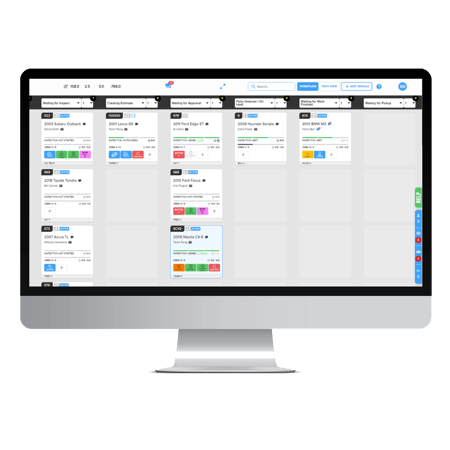
One of the simplest ways to create clarity is by using visual indicators that highlight exactly what’s happening with each job.[AutoVitals’ Smart Markers](https://www.autovitals.com/solutions/workflow-automation/) are designed to do exactly that—giving your team an instant view of what each repair order needs next.
Instead of digging through notes or asking around, your team should be able to instantly recognize key statuses like:
- Waiting for approval
- Parts on order
- Ready for pickup
These markers eliminate the need for constant communication and allow everyone to focus on advancing the work. This small shift has a big impact on how efficiently your shop operates.
# **Improving Estimate Creation and Approval Speed**
The estimate and approval process is another stage that often slows down workflow. When inspections aren’t standardized or communication is unclear, service advisors spend more time building estimates and going back and forth with technicians. That delay pushes everything else back.
Speeding this up doesn’t mean rushing—it means removing friction. When inspection results are clear and consistent, estimates can be generated more quickly. When customers receive detailed, easy-to-understand information, approvals happen sooner. And when approvals happen sooner, technicians can keep working without interruption.
Tools like[AutoVitals’ Digital Vehicle Inspections](https://www.autovitals.com/solutions/digital-vehicle-inspections/) (DVI) support this by helping technicians document findings clearly with photos, notes, and educational content, making it easier for service advisors to build accurate estimates and for customers to confidently approve recommended work.
# **Why Techs Wait (and How to Fix It)**
Technician downtime is often misunderstood. It’s easy to assume it’s a scheduling issue, but more often, it’s a workflow issue. Technicians can end up waiting because something earlier in the process hasn’t been completed. Maybe approvals are delayed. Maybe parts haven’t been ordered. Maybe the next job hasn’t been clearly assigned.
Fixing this starts with making sure there’s always a clear next step. When technicians don’t have to wonder what to do next, they stay productive without needing constant direction.
# **Tracking Time from Check-In to Pick-Up**
The first step to improving efficiency is understanding where time is being lost. First, look at the entire lifecycle of a repair from the moment a vehicle checks in to the moment it leaves the shop. Where are the delays happening? How long does each stage take? Where do vehicles tend to sit?
This kind of insight will allow you to pinpoint exactly where your workflow needs improvement, rather than making decisions by guesswork.
# **Building a Workflow That Fits Your Shop’s Unique Rhythm**
Every shop operates differently. Your workflow should reflect how your team works best. The goal is to create a process where every stage is clearly defined, every team member knows their role, and every vehicle moves forward without unnecessary delays.
That’s where having a customizable workflow becomes critical. Tools like AutoVitals’ workflow management allow shops to tailor each stage of their process and add visual markers that keep everyone aligned. Instead of forcing your shop into a system,[choose a system](https://www.autovitals.com/schedule-a-demonstration/) that supports how your shop already works.
## Read On
### [Reclaiming and Reallocating Shop Time in 10 Weeks Flat Time; a four-letter word that can be the difference between crew pushback or increased revenue at...](https://blog.autovitals.com/zero-to-time-in-10-weeks-flat-reclaiming-and-reallocating-shop-time)
### [Here’s Why Your Shop Needs a Labor Management System Five hundred and eighty minutes. That’s how much time the average technician spends asking...](https://blog.autovitals.com/auto-shop-labor-management-system)
### [How to Stop Idle Technician Time From Killing Profit Idle technician time is one of the most expensive problems in your shop and can be one of the...](https://blog.autovitals.com/how-to-stop-idle-technician-time)
### Posts by Topic
- [Digital Shop (47)](https://blog.autovitals.com/tag/digital-shop)
- [auto repair shop (44)](https://blog.autovitals.com/tag/auto-repair-shop)
- [automotive shop management software (31)](https://blog.autovitals.com/tag/automotive-shop-management-software)
- [Auto Shop (29)](https://blog.autovitals.com/tag/auto-shop)
- [Autovitals (29)](https://blog.autovitals.com/tag/autovitals)
- [DVI (29)](https://blog.autovitals.com/tag/dvi)
- [shop management (25)](https://blog.autovitals.com/tag/shop-management)
- [workflow (18)](https://blog.autovitals.com/tag/workflow)
- [Digital Marketing (17)](https://blog.autovitals.com/tag/digital-marketing)
- [BCP (16)](https://blog.autovitals.com/tag/bcp)
- [CRM (15)](https://blog.autovitals.com/tag/crm)
- [auto repair shop marketing (15)](https://blog.autovitals.com/tag/auto-repair-shop-marketing)
- [Staff Buy-In (14)](https://blog.autovitals.com/tag/staff-buy-in)
- [Best Practice (13)](https://blog.autovitals.com/tag/best-practice)
- [aro (13)](https://blog.autovitals.com/tag/aro)
- [Consistency (11)](https://blog.autovitals.com/tag/consistency)
- [Digital Vehicle Inspection (11)](https://blog.autovitals.com/tag/digital-vehicle-inspection)
- [Process Change (11)](https://blog.autovitals.com/tag/process-change)
- [Tech (11)](https://blog.autovitals.com/tag/tech)
- [service advisor (11)](https://blog.autovitals.com/tag/service-advisor)
- [COVID-19 (10)](https://blog.autovitals.com/tag/covid-19)
- [KPIs (10)](https://blog.autovitals.com/tag/kpis)
- [Shop Culture (10)](https://blog.autovitals.com/tag/shop-culture)
- [Websites (10)](https://blog.autovitals.com/tag/websites)
- [AutoVitals News (8)](https://blog.autovitals.com/tag/autovitals-news)
- [Integration (8)](https://blog.autovitals.com/tag/integration)
- [Website (8)](https://blog.autovitals.com/tag/website)
- [automotive shop software (8)](https://blog.autovitals.com/tag/automotive-shop-software)
- [Announcement (7)](https://blog.autovitals.com/tag/announcement)
- [Automotive Technician (7)](https://blog.autovitals.com/tag/automotive-technician)
- [Press Release (7)](https://blog.autovitals.com/tag/press-release)
- [Partners (6)](https://blog.autovitals.com/tag/partners)
- [auto repair marketing company (6)](https://blog.autovitals.com/tag/auto-repair-marketing-company)
- [auto repair shop SEO (6)](https://blog.autovitals.com/tag/auto-repair-shop-seo)
- [New Features (5)](https://blog.autovitals.com/tag/new-features)
- [auto repair services (5)](https://blog.autovitals.com/tag/auto-repair-services)
- [best auto repair software (5)](https://blog.autovitals.com/tag/best-auto-repair-software)
- [Coaching (4)](https://blog.autovitals.com/tag/coaching)
- [Customer Reviews (4)](https://blog.autovitals.com/tag/customer-reviews)
- [Paperless (4)](https://blog.autovitals.com/tag/paperless)
- [Reviews (4)](https://blog.autovitals.com/tag/reviews)
- [auto shop management (4)](https://blog.autovitals.com/tag/auto-shop-management)
- [multishop (4)](https://blog.autovitals.com/tag/multishop)
- [smartflow (4)](https://blog.autovitals.com/tag/smartflow)
- [Automotive Technician Shortage (3)](https://blog.autovitals.com/tag/automotive-technician-shortage)
- [DRIVE Shops (3)](https://blog.autovitals.com/tag/drive-shops)
- [Digital Shop Conference (3)](https://blog.autovitals.com/tag/digital-shop-conference)
- [Industry Events (3)](https://blog.autovitals.com/tag/industry-events)
- [Meineke (3)](https://blog.autovitals.com/tag/meineke)
- [NAPA (3)](https://blog.autovitals.com/tag/napa)
- [Shop-Ware (3)](https://blog.autovitals.com/tag/shop-ware)
- [auto parts inventory (3)](https://blog.autovitals.com/tag/auto-parts-inventory)
- [auto shop efficiency (3)](https://blog.autovitals.com/tag/auto-shop-efficiency)
- [automotive repair invoice app (3)](https://blog.autovitals.com/tag/automotive-repair-invoice-app)
- [creative (3)](https://blog.autovitals.com/tag/creative)
- [drop off (3)](https://blog.autovitals.com/tag/drop-off)
- [training (3)](https://blog.autovitals.com/tag/training)
- [web based auto repair software (3)](https://blog.autovitals.com/tag/web-based-auto-repair-software)
- [Automotive text messaging (2)](https://blog.autovitals.com/tag/automotive-text-messaging)
- [Bookkeeping for auto repair shops (2)](https://blog.autovitals.com/tag/bookkeeping-for-auto-repair-shops)
- [Case Study (2)](https://blog.autovitals.com/tag/case-study)
- [POS (2)](https://blog.autovitals.com/tag/pos)
- [Picture Edits (2)](https://blog.autovitals.com/tag/picture-edits)
- [Protractor (2)](https://blog.autovitals.com/tag/protractor)
- [Recruiting (2)](https://blog.autovitals.com/tag/recruiting)
- [RepairPal (2)](https://blog.autovitals.com/tag/repairpal)
- [TeE-Times (2)](https://blog.autovitals.com/tag/tee-times)
- [The Digital Shop Talk Radio (2)](https://blog.autovitals.com/tag/the-digital-shop-talk-radio)
- [inventory management (2)](https://blog.autovitals.com/tag/inventory-management)
- [loyalty (2)](https://blog.autovitals.com/tag/loyalty)
- [Auto mechanic interview questions (1)](https://blog.autovitals.com/tag/auto-mechanic-interview-questions)
- [BayIQ (1)](https://blog.autovitals.com/tag/bayiq)
- [Building a Bench (1)](https://blog.autovitals.com/tag/building-a-bench)
- [Campaign Manager (1)](https://blog.autovitals.com/tag/campaign-manager)
- [Canned Jobs (1)](https://blog.autovitals.com/tag/canned-jobs)
- [Community (1)](https://blog.autovitals.com/tag/community)
- [GMB (1)](https://blog.autovitals.com/tag/gmb)
- [Guided Inspection (1)](https://blog.autovitals.com/tag/guided-inspection)
- [Hiring (1)](https://blog.autovitals.com/tag/hiring)
- [Interview (1)](https://blog.autovitals.com/tag/interview)
- [MRT (1)](https://blog.autovitals.com/tag/mrt)
- [Motorist Approval (1)](https://blog.autovitals.com/tag/motorist-approval)
- [Q&A (1)](https://blog.autovitals.com/tag/qa)
- [Remote Work (1)](https://blog.autovitals.com/tag/remote-work)
- [Service Writer (1)](https://blog.autovitals.com/tag/service-writer)
- [TVP (1)](https://blog.autovitals.com/tag/tvp)
- [Tekmetric (1)](https://blog.autovitals.com/tag/tekmetric)
- [The Digital Shop Summit (1)](https://blog.autovitals.com/tag/the-digital-shop-summit)
- [Who's in our shop? (1)](https://blog.autovitals.com/tag/whos-in-our-shop)
- [auto parts (1)](https://blog.autovitals.com/tag/auto-parts)
- [auto repair shop financing (1)](https://blog.autovitals.com/tag/auto-repair-shop-financing)
- [best auto repair shop websites (1)](https://blog.autovitals.com/tag/best-auto-repair-shop-websites)
- [estimate (1)](https://blog.autovitals.com/tag/estimate)
- [financing (1)](https://blog.autovitals.com/tag/financing)
- [inflation (1)](https://blog.autovitals.com/tag/inflation)
- [marketing plan (1)](https://blog.autovitals.com/tag/marketing-plan)
- [parts catalog (1)](https://blog.autovitals.com/tag/parts-catalog)
- [pricing (1)](https://blog.autovitals.com/tag/pricing)
- [retention (1)](https://blog.autovitals.com/tag/retention)
- [script (1)](https://blog.autovitals.com/tag/script)
- [social media (1)](https://blog.autovitals.com/tag/social-media)
- [social media marketing (1)](https://blog.autovitals.com/tag/social-media-marketing)
see all
### Subscribe to our blog
[Back To Top](https://blog.autovitals.com/find-bottlenecks-fast#toTop)
[](https://www.autovitals.com/)
**AutoVitals**The automotive industry’s leading provider of integrated solutions for internet marketing, motorist engagement and customer retention.
### Contact Us
**Phone:** (866) 949-2848
**Email:** sales@autovitalsinc.com
**Facebook:** @AutoVitalsUpdate
-
-
-
-
### Solutions
[**DVI.X**Digital Vehicle Inspections](https://www.autovitals.com/dvi-x/) [**SmartFlow.X**Workflow Management](https://www.autovitals.com/smartflow-x/) [**Digital Shop.X** Inspections, Workflow, Website, & CRM](https://www.autovitals.com/digital-shop-x/)
### The Digital Shop®
[Best Practices Library](https://www.autovitals.com/best-practices-2/) [The Digital Shop® Conference 2021](https://www.autovitals.com/conference/) [Digital Shop® Talk Radio](https://help.autovitals.com/podcast/) [Digital Shop® Online Summit](https://www.autovitals.com/onlinesummit/) [Schedule a Demonstration](https://www.autovitals.com/schedule-a-demonstration/)
©2026 AutoVitals, Inc.
- [Home](https://www.autovitals.com/home/)
- [Solutions](https://www.autovitals.com/solutions/)
- [Support](https://www.autovitals.com/contact/)