---
title: How to Keep Customers Happy When You’re Slammed
description: Keep customer satisfaction high during your busiest seasons. Learn how workflow balance, transparency, and communication help auto repair shops build trust.
image: https://blog.autovitals.com/hubfs/Template%20(17)-1.png
---
(866) 949-2848 support@autovitalsinc.com
-
-
-
- [mailto:support@autovitalsinc.com](mailto:support@autovitalsinc.com)
- [tel:866-949-2848](tel:866-949-2848)
[](https://www.autovitals.com/)
×
- [The Digital Shop®](https://www.autovitals.com/the-digital-shop/)
- [Solutions](https://www.autovitals.com/solutions/)
- [Find My Solution](https://www.autovitals.com/solutions/)
- [Sell More Work Per Inspection](https://www.autovitals.com/solutions/digital-vehicle-inspections/)
- [Run at Peak Efficiency](https://www.autovitals.com/workflow/)
- [Your Shop in the Digital Age](https://www.autovitals.com/the-digital-shop/)
- [Best Practices](https://www.autovitals.com/best-practices-2/)
- [Best Practices Library](https://www.autovitals.com/best-practices-2/)
- [The Digital Shop® Talk Facebook Forum](https://www.facebook.com/groups/AutoVitalsPartners/)
- [The Digital Shop® Conference](https://www.autovitals.com/conference/)
- [The Digital Shop® Talk Radio](https://www.autovitals.com/radio/)
- [The Digital Shop® Online Summit](https://www.autovitals.com/onlinesummit/)
- [Support](https://www.autovitals.com/contact/)
- [FAQs](https://www.autovitals.com/faq/)
- [Contact Us](https://www.autovitals.com/contact/)
- [About Us](https://www.autovitals.com/about/)
- [Our Team](https://www.autovitals.com/about/)
- [Press](https://www.autovitals.com/press/)
- [Careers](https://www.autovitals.com/careers/)
- [Schedule a Demo](https://www.autovitals.com/schedule-a-demonstration/)
## The Digital Shop® Blog
# How to Keep Customers Happy When You’re Slammed
[AutoVitals](https://blog.autovitals.com/author/autovitals)
Jun 29, 2026, 9:36:02 AM
Every shop owner wants a full schedule. A packed calendar is often a sign that marketing efforts are working, customer trust is growing, and demand for your services is strong. But when the bays are full, the phones are ringing nonstop, and service advisors are juggling dozens of conversations, maintaining customer satisfaction can get tough.
During peak seasons, customers want to know that their vehicle is being properly cared for, that communication will be clear, and that they can trust the information they receive. When shops lose sight of those expectations, even a successful month can result in frustrated customers, negative reviews, and missed opportunities for long-term retention.
The good news is that customer satisfaction doesn't have to suffer when business is booming. In fact, busy periods often provide some of the best opportunities to strengthen customer relationships and demonstrate professionalism.
- [What Customers Care About Most During Peak Season](https://blog.autovitals.com/keep-customers-happy#what-customers)
- [Managing Wait Times Through Transparency](https://blog.autovitals.com/keep-customers-happy#managing-wait-time)
- [Building Trust with Digital Vehicle Inspections](https://blog.autovitals.com/keep-customers-happy#building-trust)
- [Maintaining Workflow Balance in the Front Office](https://blog.autovitals.com/keep-customers-happy#maintaining-workflow)
- [Setting Expectations Without Losing the Sale](https://blog.autovitals.com/keep-customers-happy#setting-expectations)
- [Keeping Your Team Aligned Under Pressure](https://blog.autovitals.com/keep-customers-happy#keeping-your-team)
- [Recovering Gracefully When Things Go Wrong](https://blog.autovitals.com/keep-customers-happy#recovering-gracefully)
- [Small Details Create Memorable Experiences](https://blog.autovitals.com/keep-customers-happy#small-details)
- [Customer Satisfaction Is a Competitive Advantage](https://blog.autovitals.com/keep-customers-happy#customer-satisfaction)
# **What Customers Care About Most During Peak Season**
When shops get busy, it's easy to assume customers care the most about getting their keys back as quickly as possible. While turnaround time is important, speed of repair isn’t the only thing they are looking for. Customers are often surprisingly understanding about delays *if* they feel informed. What creates frustration is uncertainty. If they don't know why a repair is taking longer than expected, or when they’ll get an update, trust erodes. This is why proactive communication is your most valuable tool for customer retention during high-volume weeks.
Most customers are looking for three things: transparency, confidence, and convenience. They want to understand what's happening with their vehicle. They want to trust the recommendations they're receiving. And they want the repair process to fit into their already busy lives.
# **Managing Wait Times Through Transparency**
Every shop experiences delays. Parts delivery trucks get stuck in traffic, diagnostics uncover hidden issues, and bolts snap. Customers get it. They experience those hiccups in their own lives. Friction happens when those delays come as a surprise.
Many shops unintentionally create frustration by providing overly optimistic timelines. Service advisors may feel pressure to secure appointments or reassure customers, leading them to promise completion dates that become difficult to meet.
Instead, underpromise and overdeliver. Set realistic expectations from the very first phone call or text. If additional work is discovered, communicate it immediately. Customers don’t expect perfection; they expect honesty.
# **Building Trust with Digital Vehicle Inspections**
Developing and nurturing trust with customers becomes even more important when you have to ask them to approve expensive repairs that they can’t see.
For decades, service advisors have had to rely on verbal explanations to sell work. But during peak season, when advisors are short on time and customers are rushing, long-winded phone calls lead to confusion and declined jobs.
[Digital Vehicle Inspections](https://www.autovitals.com/solutions/digital-vehicle-inspections/) bridge that gap instantly. By sending a DVI packed with educational photos, videos, and guided technician notes, you allow the customer to see exactly what the tech sees.
## **Why DVIs are a game-changer when you're slammed:**
- **Faster customer decisions:** Photos and technician notes help customers clearly understand vehicle needs, making it easier to approve recommended work.
- **More efficient communication:** Sending a[complete DVI](https://blog.autovitals.com/digital-vehicle-inspection-best-practices) gives customers the information they need upfront, reducing the need for multiple phone calls and follow-up conversations.
- **Improved transparency and trust:** Customers leave with a documented record of their vehicle's condition, creating a clear understanding of recommendations and helping strengthen long-term customer confidence.
# **Maintaining Workflow Balance in the Front Office**
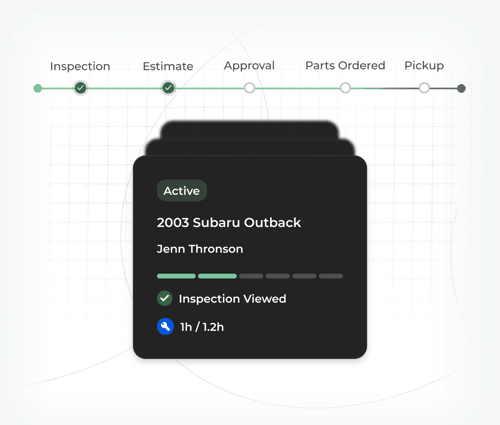
While your technicians are the ones physically working on the cars, your service advisors also carry a heavy burden during a rush. They are managing dispatching, intake, parts ordering, approvals, and customer checkouts. Without an efficient system, the service counter quickly becomes a bottleneck.
A technician may complete an inspection efficiently, but if the advisor doesn't have time to review the findings with the customer, the vehicle's progress slows down. Top shops understand that customer satisfaction is directly tied to operational efficiency. When advisors have the tools and processes necessary to communicate effectively, customers receive a smoother and more consistent experience.
The right shop management technology can help reduce administrative burdens by automating customer updates, streamlining workflows, and keeping everyone on the same page. With[AutoVitals Workflow Management](https://www.autovitals.com/solutions/workflow-automation/) supporting day-to-day operations, service advisors have more time to focus on building trust and delivering a better customer experience.
# **Setting Expectations Without Losing the Sale**
One of the biggest misconceptions in customer service is that customers only want to hear good news. In reality, customers value accuracy far more than optimism. A customer who is told a repair will take three days and receives the vehicle in three days is typically happier than a customer who was promised next-day service and experiences delays. Setting realistic expectations demonstrates professionalism. It shows that your team understands the work involved and respects the customer's time enough to provide honest information.
This approach also creates a stronger foundation for trust. Customers who believe your timelines are accurate are more likely to believe your repair recommendations as well. And they are more likely to return to your shop because they know they can trust that you’ll be transparent. In many cases, honesty becomes a competitive advantage.
# **Keeping Your Team Aligned Under Pressure**
When your shop gets busy, communication can start to break down internally. Understandably, everyone is focused on their own responsibilities. Technicians are trying to keep vehicles moving through the bays, service advisors are managing customer conversations and approvals, and managers are balancing scheduling, parts availability, and production goals. Without a clear communication process, important information can fall through the cracks.
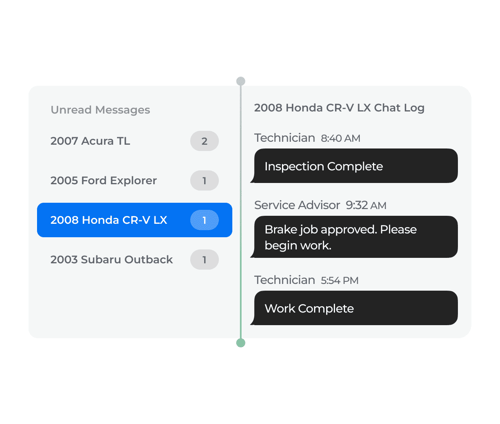
Instead of waiting for problems to surface, build communication into your daily routine. Start each morning with a brief production meeting to review the day's schedule, identify vehicles with tight deadlines, discuss parts delays, and flag jobs that may require additional customer communication. Throughout the day, encourage technicians to notify advisors as soon as they uncover additional repairs or encounter unexpected delays so customers can be updated before they have to ask. Shops using AutoVitals can also use the internal chat feature to[communicate](https://blog.autovitals.com/strategies-to-improve-service-bay-communication-and-workflow) throughout the day about repair progress, inspection findings, parts delays, and other job-specific updates without relying on in-person conversations or separate messaging apps.
It's also helpful to establish clear ownership for every vehicle in the shop. Everyone should know who is responsible for the next step, whether that's completing an inspection, ordering parts, contacting the customer, or preparing the vehicle for delivery. When responsibilities are clearly defined, work moves more smoothly, and fewer vehicles get stuck waiting for someone to take action.
When the entire team stays informed, understands each other's roles, and communicates proactively, customers receive consistent updates and experience a repair process that feels organized, professional, and predictable.
# **Recovering Gracefully When Things Go Wrong**
Even the best-run shops encounter challenges. A shipment arrives late. A repair uncovers unexpected complications. A vehicle takes longer to diagnose than anticipated. The difference between a satisfied customer and a frustrated one often comes down to how the situation is handled.
Customers appreciate accountability. When issues arise, proactive communication demonstrates professionalism and respect. Explaining the situation, outlining next steps, and providing updated expectations helps preserve trust even when circumstances aren't ideal. In many cases, customers judge a shop less by the mistake itself and more by how the shop responds.
# **Small Details Create Memorable Experiences**
Exceptional customer experiences rarely come from grand gestures. More often, they are built through consistent attention to detail. A personalized[follow-up](https://blog.autovitals.com/how-often-auto-repair-shops-follow-up) message, a clean vehicle at delivery, a clear explanation of future maintenance needs, or an advisor who remembers a customer's previous visit can leave a lasting impression.
These moments help customers feel valued rather than processed. Over time, those experiences contribute significantly to customer satisfaction and retention.
# **Customer Satisfaction Is a Competitive Advantage**
During busy seasons, it's easy to focus exclusively on productivity metrics and vehicle count. But customer satisfaction remains one of the most valuable performance indicators a shop can monitor.
Shops that maintain strong communication, balanced workflows, and transparent inspection processes can emerge from peak seasons stronger than they entered them. They earn better reviews, generate more referrals, and build deeper customer loyalty. Being busy is good for business. Keeping customers happy while you're busy is what drives sustainable growth. To see how AutoVitals can improve communication, streamline workflows, and enhance the customer experience,[book a demo](https://www.autovitals.com/schedule-a-demonstration/) today.
## Read On
### [Everything You Need to Know About Choosing a VIN Scanner If you’re trying to bring your auto shop into the digital age, having access to a Vehicle...](https://blog.autovitals.com/everything-you-need-to-know-about-choosing-a-vin-scanner)
### [Auto Repair Shop Metrics: 7 KPIs You Must Track In any line of work, including auto shop management, it pays to keep track of certain statistics...](https://blog.autovitals.com/auto-repair-shop-metrics-kpis-to-track)
### [Why Your Shop Needs Consumer Financing and How To Do It Today, every automotive repair shop should have consumer financing options. Most Americans cannot...](https://blog.autovitals.com/why-your-shop-needs-consumer-financing-and-how-to-do-it)
### Posts by Topic
- [Digital Shop (47)](https://blog.autovitals.com/tag/digital-shop)
- [auto repair shop (44)](https://blog.autovitals.com/tag/auto-repair-shop)
- [automotive shop management software (31)](https://blog.autovitals.com/tag/automotive-shop-management-software)
- [Auto Shop (29)](https://blog.autovitals.com/tag/auto-shop)
- [Autovitals (29)](https://blog.autovitals.com/tag/autovitals)
- [DVI (29)](https://blog.autovitals.com/tag/dvi)
- [shop management (25)](https://blog.autovitals.com/tag/shop-management)
- [workflow (18)](https://blog.autovitals.com/tag/workflow)
- [Digital Marketing (17)](https://blog.autovitals.com/tag/digital-marketing)
- [BCP (16)](https://blog.autovitals.com/tag/bcp)
- [CRM (15)](https://blog.autovitals.com/tag/crm)
- [auto repair shop marketing (15)](https://blog.autovitals.com/tag/auto-repair-shop-marketing)
- [Staff Buy-In (14)](https://blog.autovitals.com/tag/staff-buy-in)
- [Best Practice (13)](https://blog.autovitals.com/tag/best-practice)
- [aro (13)](https://blog.autovitals.com/tag/aro)
- [Consistency (11)](https://blog.autovitals.com/tag/consistency)
- [Digital Vehicle Inspection (11)](https://blog.autovitals.com/tag/digital-vehicle-inspection)
- [Process Change (11)](https://blog.autovitals.com/tag/process-change)
- [Tech (11)](https://blog.autovitals.com/tag/tech)
- [service advisor (11)](https://blog.autovitals.com/tag/service-advisor)
- [COVID-19 (10)](https://blog.autovitals.com/tag/covid-19)
- [KPIs (10)](https://blog.autovitals.com/tag/kpis)
- [Shop Culture (10)](https://blog.autovitals.com/tag/shop-culture)
- [Websites (10)](https://blog.autovitals.com/tag/websites)
- [AutoVitals News (8)](https://blog.autovitals.com/tag/autovitals-news)
- [Integration (8)](https://blog.autovitals.com/tag/integration)
- [Website (8)](https://blog.autovitals.com/tag/website)
- [automotive shop software (8)](https://blog.autovitals.com/tag/automotive-shop-software)
- [Announcement (7)](https://blog.autovitals.com/tag/announcement)
- [Automotive Technician (7)](https://blog.autovitals.com/tag/automotive-technician)
- [Press Release (7)](https://blog.autovitals.com/tag/press-release)
- [Partners (6)](https://blog.autovitals.com/tag/partners)
- [auto repair marketing company (6)](https://blog.autovitals.com/tag/auto-repair-marketing-company)
- [auto repair shop SEO (6)](https://blog.autovitals.com/tag/auto-repair-shop-seo)
- [New Features (5)](https://blog.autovitals.com/tag/new-features)
- [auto repair services (5)](https://blog.autovitals.com/tag/auto-repair-services)
- [best auto repair software (5)](https://blog.autovitals.com/tag/best-auto-repair-software)
- [Coaching (4)](https://blog.autovitals.com/tag/coaching)
- [Customer Reviews (4)](https://blog.autovitals.com/tag/customer-reviews)
- [Paperless (4)](https://blog.autovitals.com/tag/paperless)
- [Reviews (4)](https://blog.autovitals.com/tag/reviews)
- [auto shop management (4)](https://blog.autovitals.com/tag/auto-shop-management)
- [multishop (4)](https://blog.autovitals.com/tag/multishop)
- [smartflow (4)](https://blog.autovitals.com/tag/smartflow)
- [Automotive Technician Shortage (3)](https://blog.autovitals.com/tag/automotive-technician-shortage)
- [DRIVE Shops (3)](https://blog.autovitals.com/tag/drive-shops)
- [Digital Shop Conference (3)](https://blog.autovitals.com/tag/digital-shop-conference)
- [Industry Events (3)](https://blog.autovitals.com/tag/industry-events)
- [Meineke (3)](https://blog.autovitals.com/tag/meineke)
- [NAPA (3)](https://blog.autovitals.com/tag/napa)
- [Shop-Ware (3)](https://blog.autovitals.com/tag/shop-ware)
- [auto parts inventory (3)](https://blog.autovitals.com/tag/auto-parts-inventory)
- [auto shop efficiency (3)](https://blog.autovitals.com/tag/auto-shop-efficiency)
- [automotive repair invoice app (3)](https://blog.autovitals.com/tag/automotive-repair-invoice-app)
- [creative (3)](https://blog.autovitals.com/tag/creative)
- [drop off (3)](https://blog.autovitals.com/tag/drop-off)
- [training (3)](https://blog.autovitals.com/tag/training)
- [web based auto repair software (3)](https://blog.autovitals.com/tag/web-based-auto-repair-software)
- [Automotive text messaging (2)](https://blog.autovitals.com/tag/automotive-text-messaging)
- [Bookkeeping for auto repair shops (2)](https://blog.autovitals.com/tag/bookkeeping-for-auto-repair-shops)
- [Case Study (2)](https://blog.autovitals.com/tag/case-study)
- [POS (2)](https://blog.autovitals.com/tag/pos)
- [Picture Edits (2)](https://blog.autovitals.com/tag/picture-edits)
- [Protractor (2)](https://blog.autovitals.com/tag/protractor)
- [Recruiting (2)](https://blog.autovitals.com/tag/recruiting)
- [RepairPal (2)](https://blog.autovitals.com/tag/repairpal)
- [TeE-Times (2)](https://blog.autovitals.com/tag/tee-times)
- [The Digital Shop Talk Radio (2)](https://blog.autovitals.com/tag/the-digital-shop-talk-radio)
- [inventory management (2)](https://blog.autovitals.com/tag/inventory-management)
- [loyalty (2)](https://blog.autovitals.com/tag/loyalty)
- [Auto mechanic interview questions (1)](https://blog.autovitals.com/tag/auto-mechanic-interview-questions)
- [BayIQ (1)](https://blog.autovitals.com/tag/bayiq)
- [Building a Bench (1)](https://blog.autovitals.com/tag/building-a-bench)
- [Campaign Manager (1)](https://blog.autovitals.com/tag/campaign-manager)
- [Canned Jobs (1)](https://blog.autovitals.com/tag/canned-jobs)
- [Community (1)](https://blog.autovitals.com/tag/community)
- [GMB (1)](https://blog.autovitals.com/tag/gmb)
- [Guided Inspection (1)](https://blog.autovitals.com/tag/guided-inspection)
- [Hiring (1)](https://blog.autovitals.com/tag/hiring)
- [Interview (1)](https://blog.autovitals.com/tag/interview)
- [MRT (1)](https://blog.autovitals.com/tag/mrt)
- [Motorist Approval (1)](https://blog.autovitals.com/tag/motorist-approval)
- [Q&A (1)](https://blog.autovitals.com/tag/qa)
- [Remote Work (1)](https://blog.autovitals.com/tag/remote-work)
- [Service Writer (1)](https://blog.autovitals.com/tag/service-writer)
- [TVP (1)](https://blog.autovitals.com/tag/tvp)
- [Tekmetric (1)](https://blog.autovitals.com/tag/tekmetric)
- [The Digital Shop Summit (1)](https://blog.autovitals.com/tag/the-digital-shop-summit)
- [Who's in our shop? (1)](https://blog.autovitals.com/tag/whos-in-our-shop)
- [auto parts (1)](https://blog.autovitals.com/tag/auto-parts)
- [auto repair shop financing (1)](https://blog.autovitals.com/tag/auto-repair-shop-financing)
- [best auto repair shop websites (1)](https://blog.autovitals.com/tag/best-auto-repair-shop-websites)
- [estimate (1)](https://blog.autovitals.com/tag/estimate)
- [financing (1)](https://blog.autovitals.com/tag/financing)
- [inflation (1)](https://blog.autovitals.com/tag/inflation)
- [marketing plan (1)](https://blog.autovitals.com/tag/marketing-plan)
- [parts catalog (1)](https://blog.autovitals.com/tag/parts-catalog)
- [pricing (1)](https://blog.autovitals.com/tag/pricing)
- [retention (1)](https://blog.autovitals.com/tag/retention)
- [script (1)](https://blog.autovitals.com/tag/script)
- [social media (1)](https://blog.autovitals.com/tag/social-media)
- [social media marketing (1)](https://blog.autovitals.com/tag/social-media-marketing)
see all
### Subscribe to our blog
[Back To Top](https://blog.autovitals.com/keep-customers-happy#toTop)
[](https://www.autovitals.com/)
**AutoVitals**The automotive industry’s leading provider of integrated solutions for internet marketing, motorist engagement and customer retention.
### Contact Us
**Phone:** (866) 949-2848
**Email:** sales@autovitalsinc.com
**Facebook:** @AutoVitalsUpdate
-
-
-
-
### Solutions
[**DVI.X**Digital Vehicle Inspections](https://www.autovitals.com/dvi-x/) [**SmartFlow.X**Workflow Management](https://www.autovitals.com/smartflow-x/) [**Digital Shop.X** Inspections, Workflow, Website, & CRM](https://www.autovitals.com/digital-shop-x/)
### The Digital Shop®
[Best Practices Library](https://www.autovitals.com/best-practices-2/) [The Digital Shop® Conference 2021](https://www.autovitals.com/conference/) [Digital Shop® Talk Radio](https://help.autovitals.com/podcast/) [Digital Shop® Online Summit](https://www.autovitals.com/onlinesummit/) [Schedule a Demonstration](https://www.autovitals.com/schedule-a-demonstration/)
©2026 AutoVitals, Inc.
- [Home](https://www.autovitals.com/home/)
- [Solutions](https://www.autovitals.com/solutions/)
- [Support](https://www.autovitals.com/contact/)